
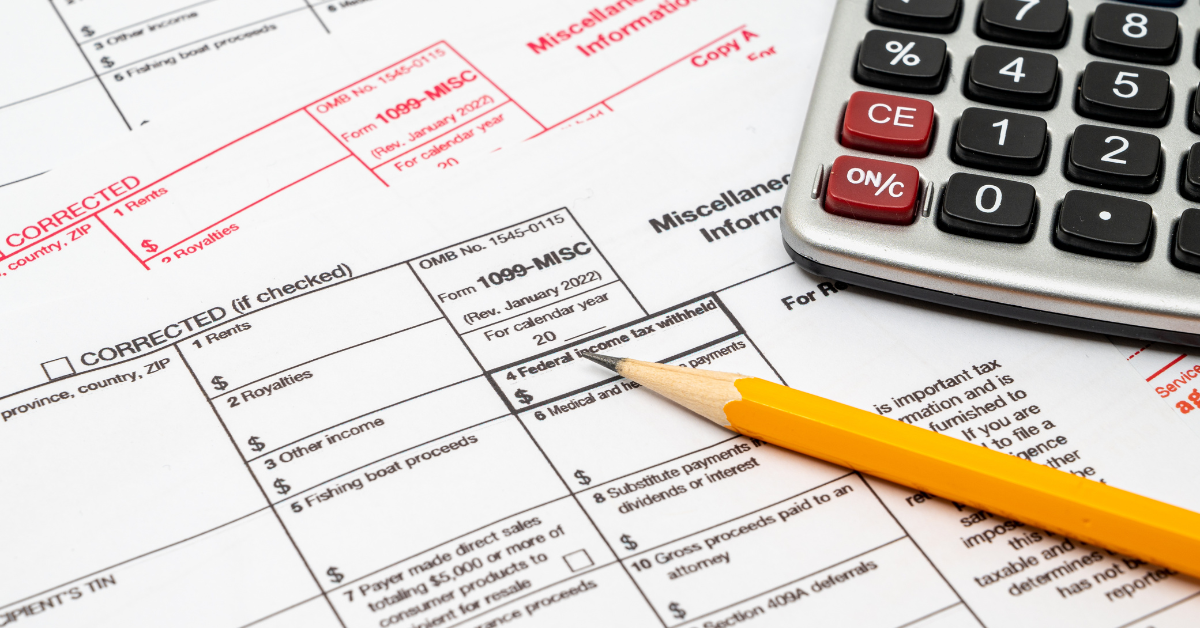
Form 1099 is how the IRS tracks non-employment income. For freelancers and small business owners, understanding Form 1099 is fundamental to managing your taxes. It informs the IRS of payments made to independent contractors, typically for services, rents, or other income not classified as wages. If you earn income as a self-employed individual, you are considered a business owner, and these forms are a critical part of your annual tax picture.
Main 1099 Forms
While several variations exist, the most common 1099 forms for freelancers and small businesses are:
- Form 1099-NEC (Nonemployee Compensation): This form reports payments of $600 or more for services performed for a trade or business by someone not considered an employee. This is the primary form you’ll encounter for independent contractor earnings.
- Form 1099-MISC (Miscellaneous Information): Previously used for nonemployee compensation, this form now reports various other types of income, such as rents, prizes and awards, or medical and healthcare payments, typically when the amount is $600 or more.
- Form 1099-K (Payment Card and Third Party Network Transactions): You’ll receive this form if you accept payments through third-party payment networks (like PayPal, Stripe, Square, etc.) and meet specific thresholds: over $20,000 in gross payments and more than 200 separate transactions in a calendar year.
Who Receives 1099s
You generally receive 1099s if a client or payment processor pays you $600 or more for services (1099-NEC/MISC) or meets the higher payment volume and transaction count for a 1099-K. However, you are still required to report all your income to the IRS, regardless of whether you receive a Form 1099. The absence of a form doesn’t absolve you of your tax responsibilities.
If You Get 1099s
As a freelancer or small business owner, receiving 1099s means you’re operating as a self-employed individual. This comes with specific tax responsibilities that differ significantly from those of a W-2 employee.
Your Tax Responsibilities
Your primary responsibility is to report all the income detailed on your 1099 forms (and any other unreported income) and pay self-employment tax. This tax covers Social Security and Medicare contributions that would typically be split between an employer and employee. Crucially, the IRS matches the income reported on your 1099 forms against its records. Missing tax documents or unreported income can lead to serious consequences. The IRS highlights an increased likelihood of an audit and penalties ranging from $60 to $330 per form for unreported 1099s, especially as new guidance takes effect for 2026 filings (hellobonsai.com).
To stay ahead, proactive income and expense tracking is non-negotiable. Many freelancers spend roughly 10 hours per year on tax preparation and about 6 hours per week on bookkeeping and administrative tasks (Clockify). This time is best invested throughout the year, not just at tax season.
Key Deadlines Ahead
Payers must issue most 1099 forms to recipients by January 31st each year. This means you should expect to have all your necessary forms by early February.
Your income reported on these forms will factor into your estimated taxes. Since no employer is withholding taxes from your payments, you are responsible for making quarterly estimated tax payments throughout the year.
If You Issue 1099s
Many successful freelancers expand their operations, hiring other contractors to help grow their businesses. If you hire individuals or other businesses and pay them for services, you may also have responsibilities for issuing 1099s.
Payer Requirements Explained
As a payer, you generally need to issue a Form 1099-NEC to any unincorporated contractor (individuals, partnerships, LLCs taxed as sole proprietors) you pay $600 or more for services in a calendar year. You are responsible for accurately classifying your workers as independent contractors versus employees, a common area of IRS scrutiny.
When to Send Forms
The deadline for payers to send Form 1099-NEC to contractors and to file it with the IRS is January 31st. This is a strict deadline, and missing it can result in penalties for the payer. Proactive tracking of payments to your contractors throughout the year is essential to ensure you meet this deadline without scrambling.
Handling 1099 Mistakes
Common Error Types
Mistakes can include incorrect income amounts, wrong Social Security numbers or Taxpayer Identification Numbers (TINs), or receiving a Form 1099 for income you didn’t earn. Receiving an erroneous Form 1099-K, for instance, is a recognized issue by the IRS (irs.gov).
How to Fix Issues
Your first step for form verification and review is to contact the payer who issued the incorrect Form 1099. Request that they issue a corrected form. If a payer is unresponsive or unwilling to correct an error, you must still report your actual income on your tax return and keep thorough records (contracts, invoices, bank statements) to support your figures. If you don’t receive an expected Form 1099, you are still obligated to report that income. Use your own accurate records for your tax filing, and consider notifying the IRS about the missing form.
Navigating 1099s, whether you’re receiving income or paying contractors, can feel daunting and complex, often leading to uncertainty during tax season. For freelancers and small businesses aiming to simplify their bookkeeping and ensure they’re always tax-ready, an AI-native platform like Fyno can significantly streamline the process, helping you track every transaction with precision and easily generate the reports needed for 1099 compliance.